Chinese Export Controls: What Installers of Battery Storage Systems Need to Know Now

From
Tobias Straumann
Recent geopolitical developments, however, cast a shadow over global supply chains: In October 2025, the Chinese Ministry of Commerce (MOFCOM) announced new Chinese export controls for advanced batteries, critical materials, and associated manufacturing technologies.
Since Europe sources a significant portion of its batteries and precursors from China, these restrictions have direct impacts on availability, prices, and project planning in Switzerland and the EU. This article analyzes what the new China battery export restrictions mean for you as an installer and which strategic responses, particularly from the circular economy, are now gaining importance.
What do the new Chinese export controls entail?
The regulations announced on October 9, 2025, and effective November 8, 2025, are not blanket bans but targeted control measures. They classify specific battery components and technologies as "dual-use" goods. This means that a special license from the Ministry of Commerce (MOFCOM) in China is now required for their export.
The controls are aimed at the most strategically important segments of the battery value chain:
High-performance batteries: The focus is on lithium-ion batteries with a high energy density of 300 watt-hours per kilogram (Wh/kg) or more.
Critical materials: In particular, artificial graphite materials for anodes, a field where China dominates more than 95% of the global market, are affected.
Manufacturing technology: The export of key technologies and machinery for battery production is also now controlled.
These China battery export controls serve Beijing as a strategic tool to secure its technological supremacy and respond to Western industrial policies.
Europe's dependence: The core problem for the BESS industry
The new regulations hit Europe at a sensitive point. The dependence on Chinese imports in the battery value chain is systemic and spans all levels:
Raw material processing: China controls over 90% of the global refining capacity for battery-grade graphite.
Components: Nearly 90% of cathode active materials and 97% of anode active materials come from China.
Finished cells: China produces about 76-85% of all lithium-ion battery cells worldwide.
For the EU, this means: In 2023, 87% of all battery imports came from China. This massive dependence makes the European and Swiss BESS industry vulnerable to the newly introduced Chinese export controls.
Concrete impacts for electrical installers
For you as an installer of battery storage systems, the abstract geopolitical maneuvers are primarily noticeable in the form of concrete business risks.
Are all battery storages affected?
The good news first: Not necessarily. The direct control targets high-performance batteries with 300 Wh/kg. Many of the lithium iron phosphate batteries (LFP) commonly used in residential and commercial segments are below this threshold. Therefore, they may not be affected by the direct battery export controls.
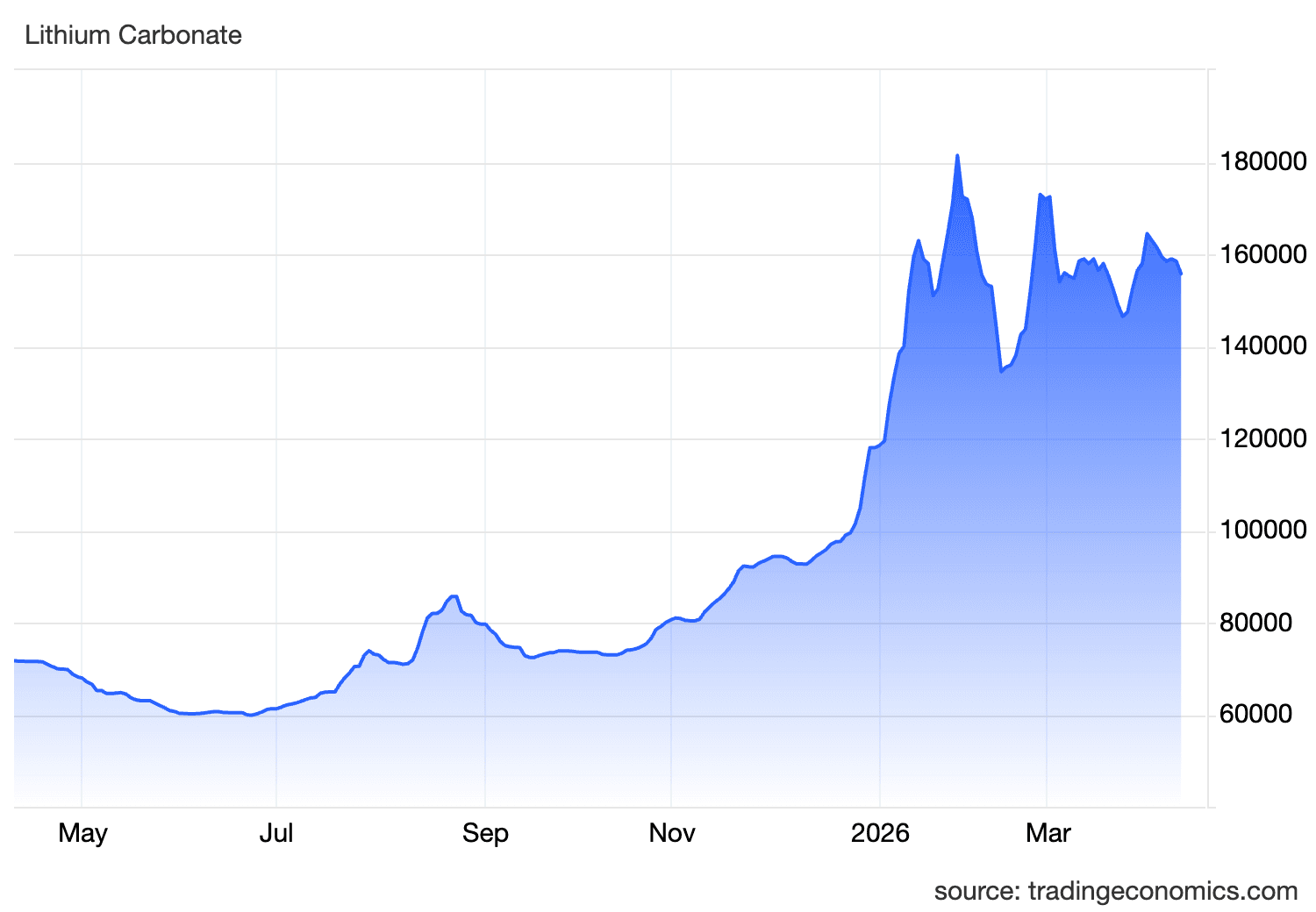
The "but" is significant: The controls for artificial graphite practically affect all types of lithium-ion batteries, including LFP. Since graphite is a crucial component of the anode, shortages or price increases in this material can make the entire battery production more expensive.
Possible consequences: Price increases and delivery delays
The introduction of a licensing procedure creates uncertainty. Even if licenses are granted for commercial end applications in Europe, the administrative burden inevitably leads to delays.
For installers, this means:
Longer project durations: The delivery times for BESS modules could be extended, complicating your project planning.
Volatile pricing: Uncertainty in the supply chain often leads to price increases, which you may need to pass on to your end customers.
Competitive disadvantage: European manufacturers that rely on Chinese precursors could be more affected than fully integrated Chinese brands.
Strategic responses: Europe's path to resilience
The Chinese export controls act as a catalyst for efforts already underway in Europe. The EU has outlined a clear course with the "Critical Raw Materials Act" (CRMA) to increase strategic autonomy.
The CRMA's goals by 2030 are ambitious:
10% of the annual consumption of strategic raw materials from domestic extraction.
40% of the annual consumption from domestic processing.
25% of the annual consumption from domestic recycling.
Focus on recycling and circular economy
Given the difficulties in establishing new mines in Europe, it quickly becomes clear: The recycling target of 25% is not just an environmental measure but an industrial necessity to achieve the processing goals of 40%. The "urban mine," which is the recovery of materials from old batteries and production waste, becomes Europe's most important domestic source of raw materials.
The opportunity of Second-Life battery storage
This is precisely where the strategic opportunity for installers lies. While building up recycling capacities takes time, there is an immediately available solution to maximize resource use: Second-Life battery storage.
Systems, like those developed by modual and produced in Switzerland, use battery modules already in circulation in Europe (e.g., from electric vehicles). These systems are completely independent of the China battery export restrictions for new cells and materials.
For you as an installer, integrating Second-Life BESS into your portfolio offers decisive advantages:
Supply security: You reduce your dependence on global supply chains for primary batteries.
Price stability: Pricing is less susceptible to geopolitical shocks affecting raw materials like graphite or lithium.
Sustainability: You offer your customers a true circular solution that aligns with the CRMA and EU battery regulation goals.
Quality: With "Swiss Made" products like those from modual, you focus on longevity, repairability, and technological excellence.
Conclusion: From dependency to strategic partnership
The Chinese export controls are a wake-up call. They signal the end of the era of unrestricted availability and cheap battery components from the Far East. In the short term, installers must prepare for a more strained market situation with potential delays and higher prices.
In the long term, the solution lies in diversification and building a resilient European value chain. As an installer, you can actively shape this change. By relying on partners committed to the circular economy and local, repairable, and durable systems like Second-Life BESS, you not only protect your own business against future shocks but also position yourself as a forward-thinking solution provider for your customers.
FAQ – Frequently Asked Questions
1. What exactly are the Chinese export controls for batteries?
Since November 8, 2025, China requires a special export license for certain battery materials (especially artificial graphite) and high-performance lithium-ion batteries (with an energy density of 300 Wh/kg or more).
2. Are my LFP residential storage systems directly affected by the controls?
Most LFP batteries for home applications are below the energy density threshold of 300 Wh/kg and are therefore likely not affected by the direct battery export ban. However, they are indirectly affected by the export controls for artificial graphite, which can lead to delivery delays and price increases.
3. What can I do as an installer to protect my business?
Proactively talk to your suppliers about their supply chains and risk assessment. Diversify your product portfolio and consider providers that rely on European production or circular models (like second-life BESS) to reduce your dependence on Chinese primary imports.
4. Why are second-life battery storages less affected by these controls?
Second-life systems, like those from modual, use battery modules that have already completed their "first life cycle" in electric vehicles in Europe. Since no new battery cells or critical graphite need to be imported from China, their production is immune to these specific China battery export restrictions.