
Top solar trends in 2026
From
Tobias Straumann
Global Market Analysis with Focus on Swiss Regulations and Dynamic Feed-in
The year 2026 marks a turning point in the history of renewable energies, particularly in the Swiss context. While the global solar industry is moving technologically towards ultra-high efficiency and diversified storage chemistry, Switzerland is undergoing a historic regulatory system change. The full entry into force of the "Mantelerlass" (Federal Act on a Secure Electricity Supply with Renewable Energies) on 1 January 2026 ends the era of static subsidies and initiates the phase of market integration.
This blog post analyses the ten most influential trends for the year 2026. It combines the macroeconomic perspective of global technology developments with an in-depth exegesis of the new Swiss market mechanisms. The core of the change is the transition from a pure focus on generation to a flexibilisation of the overall system: dynamic tariffs, harmonised return feed-in tariffs, local electricity communities (LEC) and the regulatory equality of vehicle batteries (V2G) are becoming the central drivers of profitability. The era of blind feed-in ends; the era of dynamic, data-driven energy management begins.
The analysis shows that investment decisions from 2026 onwards must follow a fundamentally new logic. The focus is no longer on maximising the kilowatt-hour harvest in summer, but on the temporal synchronisation of generation and consumption as well as the provision of flexibility for the grid.
1. Global PV Technology Evolution 2026: Beyond the Silicon Frontier
1.1 The Farewell to PERC and the Rise of TOPCon and HJT
The year 2026 will be technologically shaped by the final market dominance of n-type cell technologies, which will replace the previous p-type PERC (Passivated Emitter and Rear Cell) cells. Global production capacity has shifted massively in favour of TOPCon (Tunnel Oxide Passivated Contact) and HJT (Heterojunction). These technologies are no longer future music, but define the standard for new installations in 2026.¹
While conventional modules exhibited efficiency levels of just under 20% to 22% for over a decade, the new generation of panels is shifting commercial standards significantly into the range of 25% to 28% efficiency. This leap in efficiency is not incremental, but transformative, as it drastically reduces the levelized cost of energy (LCOE) per installed square metre of area.
Technological Differentiation:
TOPCon: This technology has established itself as the most cost-effective successor to PERC, as existing production lines could be retrofitted with moderate effort. For 2026, TOPCon is expected to serve the lion's share of the mass market.
Heterojunction (HJT): HJT cells offer even higher efficiencies and a better temperature coefficient, but are more demanding in production. In 2026, HJT modules will dominate primarily in the premium segment and in applications where maximum performance in a limited space is required.
1.2 Implications for the Swiss Market
For the Swiss market, which is geographically and structurally characterised by limited roof areas and comparatively high installation costs (soft costs and labour), this trend is of the highest relevance. Switzerland is not a country for huge open-space systems on flat ground; expansion takes place on roofs, facades, and infrastructures.
Area Efficiency as a Profit Driver: Modules with higher power density allow for more yield on the same area. This is crucial because the "Balance of System" costs (scaffolding, cabling, labour) are high in Switzerland. A module with 450 Watt Peak (Wp) on the same area as an old 350 Wp module massively reduces the relative installation costs per kWp.¹
Low-light Behaviour in the Mittelland: New cell technologies, particularly HJT, offer significant advantages in diffuse light and cloudy conditions. In the fog zones of the Mittelland, typical for Switzerland during the winter half-year, this improves the annual yield of the systems and contributes to the critical winter electricity supply.
1.3 The Game-Changer: Perovskite-Silicon Tandem Cells
A technological breakthrough that is increasingly moving from the pilot phase into commercial relevance in 2026 is perovskite-silicon tandem cells. This hybrid technology layers a perovskite cell on top of a conventional silicon cell.
How it Works: Silicon efficiently absorbs long-wavelength (red and infrared) light, while perovskite can be tuned to optimally use shorter wavelengths (blue and green). This combination makes it possible to exploit the solar spectrum far better than any single technology and promises efficiencies beyond the theoretical Shockley-Queisser limit of pure silicon (approx. 29%).²
Market Stage 2026: Although the potential is enormous, questions of long-term stability still remain the focus in 2026. Perovskites are sensitive to moisture, oxygen, and UV light. However, encapsulation technologies have made great progress by 2026. First commercial tandem modules are expected in 2026 for niche applications, for example in the high-priced BIPV (Building Integrated Photovoltaics) segment or for electric vehicles with integrated solar cells (VIPV), before they penetrate the mass market towards the end of the decade.
1.4 Aesthetics and BIPV as Standard
Driven by stricter building regulations and aesthetic demands in Switzerland (especially in historic preservation zones), building-integrated solutions (BIPV) are evolving from a niche product to a standard in 2026. Coloured modules, solar roof tiles, and transparent solar facades benefit from the efficiency increases of the base technology. Since the notification procedure for facade installations in Switzerland is further simplified and standardised starting in 2026, aesthetically pleasing facade solutions are experiencing a boom in demand.³
2. The Swiss "Mantelerlass": System Change in Regulation
2.1 Historical Context and Entry into Force
The dominant topic for all Swiss market players in 2026 is the full operational effectiveness of the second package of the "Federal Act on a Secure Electricity Supply with Renewable Energies", often referred to in technical jargon as the Mantelerlass. Following the clear approval by the Swiss electorate in June 2024 (68.7% Yes votes), the profound changes in the Energy Ordinance (EnV) and the Electricity Supply Ordinance (StromVV) will take effect on 1 January 2026.⁵
This ends a years-long phase of regulatory uncertainty. The Mantelerlass is the answer to the impending winter electricity gap and the need to massively accelerate the expansion of renewables without endangering grid stability.
2.2 Goals and Mechanisms of the Mantelerlass
From 2026, the legislator is pursuing a dual strategy: accelerating expansion while integrating into the market.
The Four Pillars of the Act from 2026:
Market Premiums instead of Feed-in Tariffs: For large systems (>150 kW), the support system is being switched from fixed feed-in tariffs to sliding market premiums. System operators must market their electricity themselves; the premium only covers the difference to the levelized cost of energy if the market price falls too low. This forces large-scale system operators to professionalise.⁷
Harmonisation of Return Feed-in Tariffs: For smaller systems (which are not in direct marketing), the tariff chaos of the over 600 Swiss distribution grid operators is brought to an end (see Chapter 6).
Winter Electricity Focus: The expansion of PV (especially on roofs and facades) is no longer viewed merely as an ecological measure, but as safety-relevant infrastructure. Systems that deliver a high winter share (alpine systems, facades, wind power) receive privileged planning conditions and specific investment contributions.⁵
Efficiency Obligation for Utilities: Energy supply companies are obliged to prove efficiency measures at their end customers, which promotes new business models for energy-saving contracting.⁹
2.3 Investment Implications: The New Architecture of Return
Investment decisions from 2026 onwards must be made under completely new premises. The maxim of pure maximisation of annual production (flat south orientation) that applied for decades is obsolete.
Anticyclical Production: Since market prices in summer tend towards zero or negative due to the oversupply of solar energy, pure summer electricity is economically hardly valuable anymore.
System Design: System designs that are grid-supportive and deliver winter electricity gain massive value.
Steep Angle of Attack & Facades: These capture the low winter sun optimally and are less prone to snow cover.
East-West Orientation: This smooths the generation curve over the day and reduces the midday peak, which fits better with the self-consumption profile and minimises curtailment losses (see Chapter 7).
The regulatory relief for systems of national interest also means that major projects in the Alps or on large infrastructures can be realised faster, as objection options have been limited and procedures concentrated.⁵
3. Dynamic Electricity Tariffs and the Digitalisation of Billing
3.1 End of High and Low Tariffs
A paradigm shift that directly affects the daily lives of Swiss households starting in 2026 is the slow demise of classic high and low tariffs (HT/NT). These static models, which were originally created to direct consumption into the night hours (baseload energy of nuclear power plants and run-of-river power plants), no longer correspond to the reality of a grid dominated by fluctuating PV. From 2026, energy utilities must offer their customers dynamic tariffs (time-variable tariffs), provided they have an intelligent metering system (smart meter).¹¹ The Electricity Supply Act (StromVG) and the Electricity Supply Ordinance (StromVV) create the explicit legal framework for this.
3.2 How it Works, Illustrated by the EKZ "Optional Tariff"
Pioneers such as the Elektrizitätswerke des Kantons Zürich (EKZ) are already introducing dynamic optional tariffs starting in 2026. The analysis of these tariffs shows where the entire Swiss market is heading. The model consists of two dynamic components ¹³:
Dynamic Energy Component: This is based on the spot market price (day-ahead market) of the power exchange. It reflects the actual scarcity or surplus of energy. On a sunny, windy Sunday midday, this price can be close to zero.
Dynamic Grid Use Component: This is revolutionary. It is based on local grid utilisation. The goal is to break local peak loads (peak shaving). If the transformer in the neighbourhood is at its limit, the grid price increases; if the grid is empty, it falls.
The Mechanics: Prices change in 15-minute intervals. The tariffs for the following day are usually transmitted to the customer's energy management system (EMS) on the previous day (approx. 13:00 to 18:00) via API.
3.3 Technological Prerequisites and Risks
Participation in such models is not automatic. It absolutely requires an energy management system (EMS).
Automation is Mandatory: A human cannot decide every 15 minutes whether to turn on the washing machine. The EMS must control large consumers (heat pump, e-car, boiler, battery storage) fully automatically. It receives the price signals and optimises the schedule of the devices.
Risk Transfer: The risk of price volatility is partially transferred from the utility to the end customer. Without automation, cost traps loom if consumption falls unmanaged into high-price phases (e.g. the "dark doldrums" on a cold winter evening). Conversely, customers with high flexibility (e.g. e-car owners) can drastically reduce their energy costs by charging almost exclusively at the lowest prices.¹⁵
4. Local Electricity Communities (LEC): The Democratisation of the Grid
4.1 From RCP to LEC
With the year 2026, Switzerland introduces a new instrument for decentralised energy supply: the Local Electricity Community (LEC). This is a significant legal and physical expansion of the previous model of the association for self-consumption (RCP).¹¹
The Decisive Difference:
RCP (Status Quo until 2025): An RCP operates behind a single grid connection point. Physically and accounting-wise, the RCP acts as a single major customer towards the grid operator. The internal grid often belongs to the owners. The model was mostly limited to a building or directly adjacent plots.
LEC (New from 2026): The LEC allows electricity trading via the public distribution grid. The perimeter is extended to a neighbourhood or even an entire political municipality. Participants retain their individual meters and connections.¹⁷
4.2 Economic Incentives: Reduced Grid Fees
The economic engine of the LEC is the discount on grid use. Since the electricity within the LEC is generated and consumed locally, it does not burden the higher grid levels (high voltage/transmission grid). The legislator rewards this from 2026 onwards with a reduced grid use tariff.
Savings Potential: The discount on the active energy prices of grid use can be significant (often 40–60% of the active energy price of grid use). This creates a margin that can be split between the solar producer and the consumer. The producer receives more than with feed-in into the grid (see Chapter 6), the consumer pays less than when purchasing from the basic supplier.¹²
4.3 Social and Structural Impacts
The LEC enables for the first time broad participation in the energy transition for groups that were previously excluded:
Tenants and Apartment Owners: They can become part of an LEC even if their own roof is not suitable.
Commerce: An industrial business with a large roof area but low self-consumption at the weekend can now sell its solar power to the surrounding residential neighbourhoods.
Storage Operators: Even pure storage operators can be participants in an LEC and function as a buffer for the community.¹⁷
5. Storage Evolution: Technology and Profitability
5.1 Technology Diversification: Sodium-ion and Solid-state
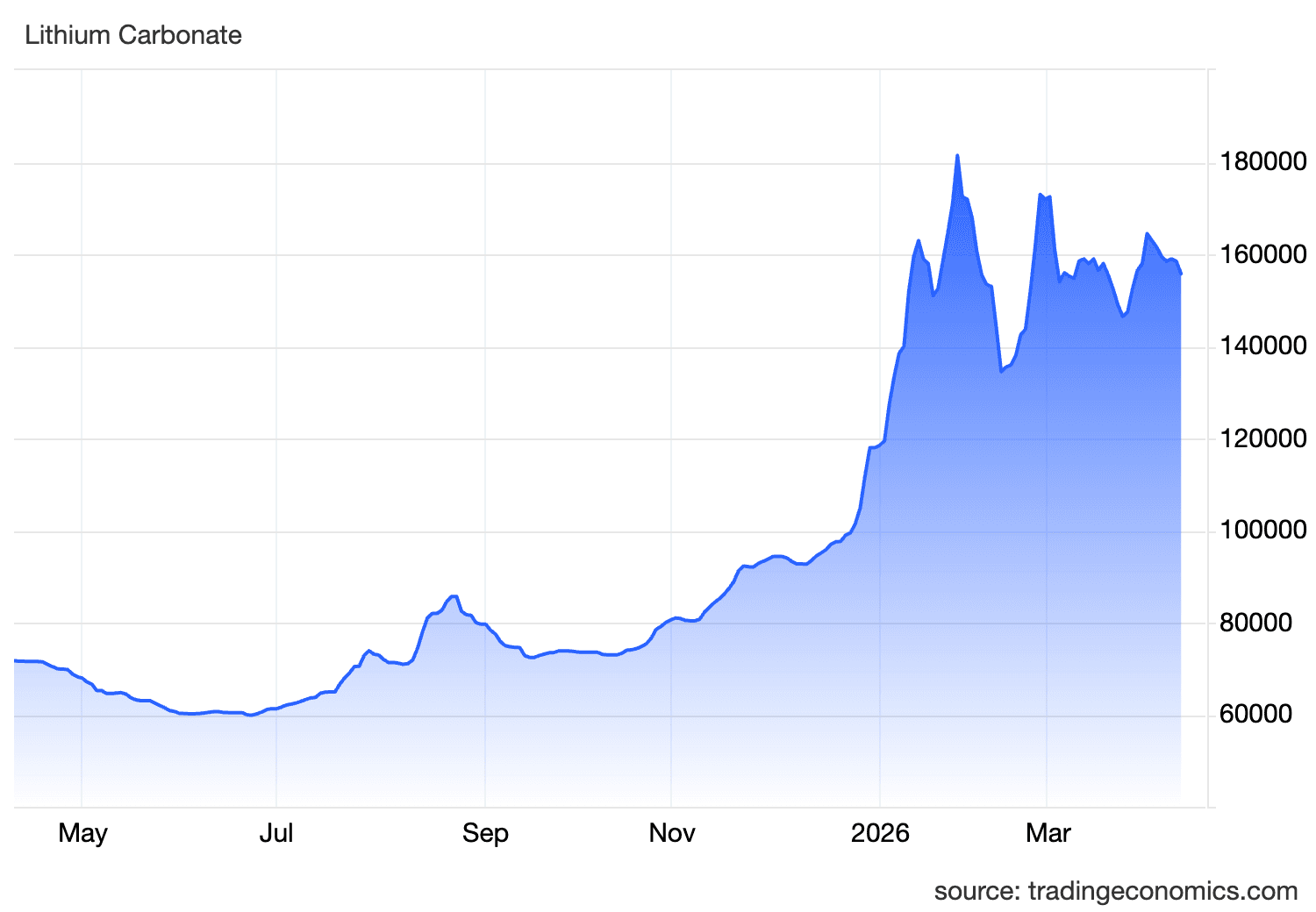
The storage market is undergoing a shift in 2026 from pure "emergency power backup" to intelligent trading hubs. Technologically, the market is diversifying to reduce dependencies on critical raw materials such as lithium and cobalt.
Sodium-ion Batteries (Sodium-Ion): This technology is one of the most exciting trends for 2026. It completely dispenses with lithium and instead uses highly available sodium. Although the energy density is lower than with Li-ion, which makes them less attractive for electric cars with long range, weight is of secondary importance for stationary home storage. The advantages lie in the costs (cheaper raw materials), safety (non-flammable) and performance at low temperatures (important for storage in garages or outdoors in Switzerland). For 2026, the commercial breakthrough in the stationary segment is expected.²⁰
Solid-state Batteries (Solid-State): These remain largely reserved for the premium EV segment in 2026, but could reach first high-end home storage where space saving is critical.
5.2 Profitability under New Framework Conditions (Spread & Arbitrage)
Until 2025, battery storage in Switzerland was often installed for ideological reasons or to purely increase self-sufficiency ("independence from the utility"). From 2026, the calculation changes to a hard business case, driven by three factors ¹²:
Tariff Spread (Spread): The difference between the low return feed-in tariff in summer (market price) and the purchase price in winter or in the evening (incl. grid costs and levies) increases massively. Every kilowatt-hour self-stored and consumed saves approx. 20–25 Rp.
Intraday Arbitrage: In combination with dynamic tariffs (Chapter 3), storage systems can charge cheap grid electricity in winter when PV supplies little during low-price times (e.g. at night with wind peaks or Sunday afternoons) and discharge in the morning or evening high-price phases. The BMS becomes a trader.
Grid Fee Exemption: The explicit exemption from grid fees for feed-in (for storage without end consumption) creates incentives for grid-supportive large-scale storage systems that offer control power.⁶
5.3 Impact of the EU Battery Regulation
Although Switzerland is not an EU member, the EU Battery Regulation, whose important phases take effect in 2026, has a direct impact. Swiss importers and manufacturers must meet the requirements to remain marketable.
Carbon Footprint: From 2026 (for industrial batteries) or staggered for other types, proof of a carbon footprint ("Battery Passport") must be provided. This disadvantages batteries from production with a high share of coal-fired electricity and benefits "green" batteries.
Recycled Content: Targets for the share of recycled material force the industry into closed loops (circular economy).
second-life: The regulation clearly governs the status of second-life batteries, which professionalises the Swiss market for used EV batteries as stationary storage.²²
6. Harmonisation of Return Feed-in Tariffs
6.1 The End of the Patchwork
One of the most politically and economically drastic changes starting on 1 January 2026 is the Switzerland-wide harmonisation of return feed-in tariffs. The previous system, in which each of the over 600 distribution grid operators (DGO) set its own tariffs (from <4 Rp. to >20 Rp.), is replaced by a nationwide uniform reference model.¹¹
6.2 The Mechanics of Quarterly Prices
Unless there is an individual agreement (e.g. PPA), the remuneration is based on the quarterly averaged reference market price. The Federal Office of Energy (SFOE) calculates this price retroactively after each quarter based on spot market prices.²⁵
The Consequences:
Seasonal Volatility: In summer (Q2/Q3), when solar installations produce the most, market prices often plummet due to the European-wide oversupply. The remuneration will be low in these quarters (forecasts expect 2–4 Rp. active energy price).
Winter Bonus: In winter (Q1/Q4) prices rise. This rewards installations that also deliver in winter (see Chapter 2.3).
6.3 The Safety Rope: Minimum Remuneration
In order not to choke off expansion for small installations, the Federal Government is introducing a lower limit.
Systems < 30 kW: A minimum remuneration of probably 6 Rp./kWh (plus HKN remuneration if applicable) applies here. Should the market price fall to 2 Rp., small-scale system operators still receive 6 Rp. This is a "put option" for the system owner, funded by the grid surcharge fund.²⁵
Systems 30–150 kW: A sliding minimum remuneration applies here, which decreases with increasing system size (formula: 180 / capacity in kW). A 90 kW system would therefore only receive 2 Rp./kWh minimum remuneration for the capacity part over 30 kW. This forces larger system operators more into market responsibility and promotes self-consumption.²⁷
Guarantees of Origin (GoO): In addition to the price for the physical energy, the ecological added value is remunerated via guarantees of origin. A standardisation is also emerging here, with many utilities (such as EKZ) introducing caps (e.g. max. 3 Rp./kWh) to keep total costs within limits.²⁶
7. Grid-Supportive Feed-in Regulation: The 70% Rule
7.1 Technical Necessity
The massive expansion of PV systems leads to overloading of transformers and lines in many local distribution grids on sunny days. Conventional grid expansion (copper in the ground) is too expensive and too slow. Therefore, the grid-supportive feed-in regulation comes into force on 1 January 2026.²⁸
7.2 Implementation and Impact
New PV systems (as well as existing systems when inverters are replaced) may feed in a maximum of 70% of their installed DC power (generator capacity) into the grid at the connection point. Example: A system with 10 kWp installed module capacity may feed a maximum of 7 kW into the grid.
Peak Shaving: Since PV systems only rarely reach their nominal power (cold, clear days at midday) and the generation curve is a bell, the curtailment only affects the absolute peak.
Energetic Loss: Studies (e.g. by BFH and Groupe E) show that the energetic loss due to this curtailment is minimal (often < 1–3% of the annual yield). The economic damage is even lower, since these peaks occur exactly when the electricity price on the market is lowest anyway.²⁸
Intelligent Use: The regulation does not forbid production of more than 70%, but only feed-in. The energy above the limit can be used for self-consumption (charging the e-car, heating up the boiler, charging the battery). The 70% rule thus acts as a strong incentive ("nudge") for the installation of storage and intelligent controls (EMS).²⁹
8. Convergence of Mobility and Grid (V2G/V2H)
8.1 The Regulatory Breakthrough
The year 2026 is touted as the year in which Vehicle-to-Grid (V2G) makes the leap from pilot projects into commercial reality. The regulatory hurdles that previously prevented the "car as storage" are falling.
Switzerland: The new Electricity Act and the Electricity Supply Ordinance (StromVV) provide that grid utilisation fees for stored and fed-back electricity are refunded. This explicitly also applies to mobile storage (e-cars), provided they have an intelligent metering system. This eliminates the economically fatal "double burden" (grid fee when charging the car AND when discharging into the house/grid would have been due without this rule). Vehicle batteries are regulatorily equated with stationary storage.¹⁹
Germany: In the neighbouring country, double grid fees will also be dropped starting in 2026, which will drive the market for bidirectional wallboxes across Europe.³⁴
8.2 Standards and Technology (ISO 15118-20)
The technical basis is formed by the ISO 15118-20 standard. This enables intelligent communication between vehicle and grid ("Plug & Charge" as well as bidirectional charging). By 2026, the majority of new e-car models and wallboxes are expected to support this standard out of the box. The distinction between DC charging (expensive wallbox, inverter in the wallbox) and AC charging (cheaper wallbox, inverter in the car) remains a technical competition. For the mass market (V2H), experts see advantages in AC solutions as soon as vehicle manufacturers release this.³ sister
8.3 Use Cases
V2H (Vehicle-to-Home): The e-car serves as a huge home storage (50–80 kWh capacity vs. 10 kWh stationary) to increase self-sufficiency and bypass the 70% curtailment. It easily bridges several days without sun.
V2G (Vehicle-to-Grid): Aggregated fleets provide control power. Since storage operators can also participate in LECs in Switzerland starting in 2026, e-cars could theoretically trade their electricity in the neighbourhood.³⁶
9. Solar Obligation and Building Envelope
9.1 Cantonal Heterogeneity
While the Confederation sets out the broad outlines with the Mantelerlass, building regulations remain the responsibility of the cantons. In 2026, a heterogeneous picture emerges here, which is challenging for developers and planners.
New Buildings: In almost all cantons (e.g. Zurich, Aargau, Vaud), self-generation of electricity in new buildings is effectively mandatory (via MuKEn 2014/2025). Anyone who builds new, builds solar.³⁷
Existing Buildings: Here opinions differ.
Canton of Bern: A far-reaching solar obligation for existing buildings (renovations) was rejected by the people. The counter-proposal, which could come into force in 2026, limits the obligation to new buildings and large parking lots.⁴
Canton of Zurich: There is no general obligation for existing buildings, but strict requirements for heating system replacement (renewable heating), which often indirectly leads to PV.³⁸
9.2 Reliefs: Notification Procedure for Facades
To harness the potential of winter electricity production on facades, the Confederation has adapted the Spatial Planning Act. From 2026, simplified notification procedures (instead of building permit procedures) will take effect for solar installations on facades, provided they are not in protection zones. This significantly reduces bureaucratic hurdles and costs for facade PV and makes BIPV solutions (see Chapter 1) more attractive.³
10. Decarbonisation of Industry and Corporate PPAs
10.1 CO2 Ordinance and Border Adjustment
The revised CO2 Ordinance and the CO2 Act, which Switzerland is developing in line with EU climate goals, are putting pressure on industry. From 2026, the allocations of free emission rights in the emissions trading system (ETS) will be further reduced. This makes CO2 emissions more expensive. In parallel, the Swiss export economy is preparing for the EU Carbon Border Adjustment Mechanism (CBAM). Swiss companies must prove that their products are "green" to avoid paying punitive tariffs when exporting to the EU. This drives the demand for guarantees of origin and direct power purchase agreements (PPAs).⁴¹
10.2 The Rise of Corporate PPAs
Due to uncertain market price developments (see Chapter 6), major consumers (industry, data centres) and large-scale system operators (investors) are looking for stability. Corporate Power Purchase Agreements (PPAs) are experiencing a boom in 2026. In this process, a company signs a long-term contract (e.g. 10 years) directly with a solar park operator.
Advantage Consumer: Price certainty and green proof for ESG reporting.
Advantage Producer: Bankability (financibility) of the project through secured income, independent of volatile quarterly market prices or falling minimum remunerations. The Mantelerlass supports this trend by improving the framework conditions for direct sale and transmission (e.g. within LECs or through clear accounting rules).⁴³
Conclusion: The New Complexity as an Opportunity
The solar year 2026 in Switzerland is shaped by the transition from a phase of subsidies to a phase of market integration. The "watering can principle" of static remunerations makes way for a system that rewards flexibility, winter electricity and grid-supportive behavior.
For system owners, complexity is increasing: they must decide whether to become part of an LEC, choose dynamic tariffs, use their e-car as storage and how to size their system (70% rule). The simple calculation "fill up the roof, feed in, collect remuneration" no longer applies unconditionally.
Table: Comparison of Strategies 2025 vs. 2026
Strategy Dimension | Until 2025 (Status Quo) | From 2026 (New World) |
Orientation | South (maximum yield kWh) | East-West / Facade (Winter/Self-consumption) |
Remuneration | Fixed / DGO-dependent | Market price (quarterly) / harmonised |
Tariff | High/low tariff (Static) | Dynamic (15-minute / Spot market) |
Storage | Self-sufficiency hobby | Economic flexibility hub |
Surplus | Feed-in | LEC trading or V2G storage |
E-mobility | Pure consumer | Active storage (V2H/V2G) |
But this complexity offers immense opportunities: those who control their system intelligently and integrate storage can significantly lower their energy costs despite volatile markets and actively contribute to the stability of the Swiss electricity grid. The solar market 2026 is no longer just a market for modules, but primarily a market for data, flexibility and intelligent control.
Configure battery storage now and increase self-consumption: modual.ch/konfigurator
Sources
Watts Next? The Biggest Game Changers in Solar Tech for 2026 - SunGarner, accessed on December 23, 2025, https://www.sungarner.com/blogs/home/details/the-biggest-game-changers-in-solar-tech-for-2026
7 New Solar Panel Technology Trends for 2026 - GreenLancer, accessed on December 23, 2025, https://www.greenlancer.com/post/solar-panel-technology-trends
From 2026: Notification procedure for facade PV - Swissolar, accessed on December 23, 2025, https://www.swissolar.ch/de/news/detail/ab-2026-meldeverfahren-fuer-fassaden-pv-78578
Solar obligation Bern: What house owners in the canton of Bern need to know now, accessed on December 23, 2025, https://www.energyunlimited.ch/solar-ratgeber/solarpflicht-bern
Secure electricity supply - Federal Department of the Environment, Transport, Energy and Communications DETEC, accessed on December 23, 2025, https://www.uvek.admin.ch/de/sichere-stromversorgung
Electricity Act: New regulations and many implementation questions - Association of Swiss Electricity Companies | VSE, accessed on December 23, 2025, https://www.strom.ch/de/perspective/stromgesetz-neue-regelungen-und-viele-umsetzungsfragen
Implementation of the Electricity Act: An important step for the energy transition – swisscleantech, accessed on December 23, 2025, https://www.swisscleantech.ch/artikel/stromgesetz-ein-wichtiger-schritt-fuer-die-energiewende/
Amendment of the purchase and remuneration obligation for renewable energies | VSE, accessed on December 23, 2025, https://www.strom.ch/de/nachrichten/aenderung-der-abnahme-und-verguetungspflicht-fuer-erneuerbare-energien
Electricity Act (Mantelerlass) | VSE - Association of Swiss Electricity Companies, accessed on December 23, 2025, https://www.strom.ch/de/schwerpunkte/stromgesetz-mantelerlass
Key changes in the Swiss Electricity Act - Regionalwerke Baden, accessed on December 23, 2025, https://www.regionalwerke.ch/privat-geschaeftskunden/news/detail/wichtigste-aenderungen-im-schweizer-stromgesetz
Electricity market 2026: What is changing in Switzerland | energy unlimited, accessed on December 23, 2025, https://www.energyunlimited.ch/solar-ratgeber/strommarkt-2026-was-sich-in-der-schweiz-aendert
What is worthwhile? Sell, feed-in or store solar power? - Heizungsmacher AG, accessed on December 23, 2025, https://www.heizungsmacher.ch/wissen/solarstrom-verkaufen-in-der-schweiz-einspeisen-eigenverbrauch-oder-direktvermarktung
EKZ is introducing dynamic tariffs as an optional tariff from 2026, accessed on December 23, 2025, https://www.ekz.ch/de/blue/wissen/2025/dynamische-wahltarife-2026.html
Tariffs for private customers - EKZ, accessed on December 23, 2025, https://www.ekz.ch/de/angebote/strom/tarife/stromtarife-privatkunden.html
Dynamic tariff - EKZ, accessed on December 23, 2025, https://www.ekz.ch/de/angebote/strom/tarife/dynamischer-wahltarif.html
2026 will be the year of battery storage – What installers need to know now, accessed on December 23, 2025, https://www.elektron.ch/de/news/2026-wird-das-jahr-der-batteriespeicher-was-installateure-jetzt-wissen-muessen
Co-shaping the energy transition locally with LEC from 2026 - EKZ, accessed on December 23, 2025, https://www.ekz.ch/de/blue/wissen/2025/2026-LEG-Energiewende-lokal-mitgestalten.html
New Electricity Act: What companies need to know now - Basler & Hofmann, accessed on December 23, 2025, https://www.baslerhofmann.ch/impulse/neues-stromgesetz-was-unternehmen-jetzt-wissen-muessen
Switzerland expands rules for rooftop solar, storage, energy communities - PV Magazine, accessed on December 23, 2025, https://www.pv-magazine.com/2025/02/24/switzerland-expands-rules-for-rooftop-solar-storage-energy-communities/
2026 Trends: The Future of Home Energy Storage Solutions - Anern Store, accessed on December 23, 2025, https://www.anernstore.com/blogs/diy-solar-guides/2026-trends-home-energy-storage
Dive into the Top 10 Energy Storage Trends & Innovations [2026], accessed on December 23, 2025, https://www.startus-insights.com/innovators-guide/energy-storage-trends/
Battery storage with photovoltaics - Swissolar, accessed on December 23, 2025, https://www.swissolar.ch/02_markt-politik/batteriespeicherbericht/130525_batteriespeicher_bericht_sws.pdf
The EU Battery Regulation - IHK Elbe-Weser, accessed on December 23, 2025, https://www.ihk.de/elbeweser/produktmarken/themen-fuer-unternehmen/umweltschutz/abfallwirtschaft/eu-batterieverordnung-6061356
New EU Battery Regulation: Measures for a sustainable circular economy - rebat, accessed on December 23, 2025, https://www.rebat.de/neue-eu-batterieverordnung-massnahmen-fuer-eine-nachhaltige-kreislaufwirtschaft/
Return feed-in tariffs 2026 - EKZ, accessed on December 23, 2025, https://www.ekz.ch/de/blue/wissen/2025/rueckliefertarife-2026.html
Return feed-in tariffs - EKZ, accessed on December 23, 2025, https://www.ekz.ch/de/privatkunden/solaranlage/gut-zu-wissen/rueckliefertarife.html
Return feed-in tariffs 2026: Facts you should know - Werke Fehraltorf, accessed on December 23, 2025, https://www.werkefehraltorf.ch/aktuelles/109145
Grid-supportive feed-in regulation - BKW, accessed on December 23, 2025, https://www.bkw.ch/de/strom-in-der-grundversorgung/fuer-fachpersonen-und-partner/netzdienliche-einspeiseregelung
Solar feed-in limitation: What does this mean for your solar installation? - EWS AG, accessed on December 23, 2025, https://ews.ch/produkte-dienstleistungen/energie/netz-nutzen/meldewesen-und-geraete/einspeisebegrenzung
More solar power in the grid - EWO - Elektrizitätswerk Obwalden, accessed on December 23, 2025, https://ewo.ch/news/mehr-solarstrom-im-netz/
The future needs flexibility: Batteries as the key to the energy transition | VSE, accessed on December 23, 2025, https://www.strom.ch/de/perspective/zukunft-braucht-flexibilitaet-batterien-als-schluessel-zur-energiewende
Bidirectional charging: V2H, V2G and V2L at a glance | CKW, accessed on December 23, 2025, https://www.ckw.ch/gebaeudetechnik/ladeinfrastruktur/bidirektionales-laden
Federal Act on a Secure Electricity Supply with Renewable Energies: Amendment of the Electricity Supply Ordinance with entry into force on 1 January 2026 Explanatory report - Admin, accessed on December 23, 2025, https://www.newsd.admin.ch/newsd/message/attachments/91799.pdf
Bundestag achieves breakthrough for bidirectional charging: Vehicle-to-grid becomes possible, accessed on December 23, 2025, https://mobilityhouse-energy.com/de_de/news/artikel/bundestag-schafft-durchbruch-fuer-bidirektionales-laden-vehicle-to-grid-wird-moeglich
The implementation of V2G - The Mobility House Energy, accessed on December 23, 2025, https://mobilityhouse-energy.com/de_de/knowledge-center/artikel/umsetzung-von-v2g
Swiss Review: In the future, millions of cars will combine their batteries, accessed on December 23, 2025, https://www.swisscommunity.org/en/news-media/swiss-revue/article/in-the-future-millions-of-cars-will-combine-their-batteries
Energy transition in the cantons: Regulations & alternatives | heizungsmacher.ch, accessed on December 23, 2025, https://www.heizungsmacher.ch/wissen/energiewende-in-den-kantonen-vorschriften-und-alternativen
Building regulations energy | Canton of Zurich, accessed on December 23, 2025, https://www.zh.ch/de/planen-bauen/bauvorschriften/bauvorschriften-gebaeude-energie.html
Canton of Bern : Solar obligation on new buildings as well as with large new parking spaces, accessed on December 23, 2025, https://energiehub-gebaeude.ch/fokus/kanton-bern-solarpflicht-auf-neubauten-sowie-bei-grossen-parkplatzneubauten/
Register solar installation | Canton of Zurich, accessed on December 23, 2025, https://www.zh.ch/de/planen-bauen/baubewilligung/baueingabe-verfahren/meldeverfahren-solaranlagen-waermepumpen-eladestationen/solaranlage-melden.html
Federal Council brings partial revision of the CO2 Ordinance in the ETS sector into force, accessed on December 23, 2025, https://www.news.admin.ch/de/newnsb/WTThXJcjph3bZSS7GF3_1
New CO2 Ordinance: Federal Council punishes leaders! - Swissmem, accessed on December 23, 2025, https://www.swissmem.ch/de/themen/nachhaltigkeit/neue-co2-verordnung-bundesrat-straft-spitzenreiter-ab.html
Horizons Top Trends 2026, accessed on December 23, 2025, https://www.spglobal.com/energy/en/news-research/special-reports/energy-transition/horizons-top-cleantech-trends-2026