Clean electricity at 2,257 meters: How a second-life battery storage system supplies the Sustlihütte

From
Michael Moratti
Where the public electricity grid ends, alpine craftsmanship begins. During the renovation of the Sustlihütte SAC in Meiental in the canton of Uri, the power supply in the high mountains presented the team with special challenges.
Photovoltaically generated energy must be used efficiently when no mains cable leads into the heights. A mobile battery storage system from modual AG is being used in this project.
How does the self-sufficient power supply work for hut renovations in the high mountains?
Problem: Photovoltaic systems on alpine construction sites are often too small to operate heavy construction machinery and supply the kitchen infrastructure at the same time.
Solution: A separated load distribution. The mobile second-life battery storage system buffers the generated solar power and specifically secures the energy supply of the hut kitchen.
Sustainability: After its use during the renovation, the entire storage system is permanently installed in another mountain hut infrastructure without wasting materials.
The challenge at the Susten Pass: power supply without mains connection
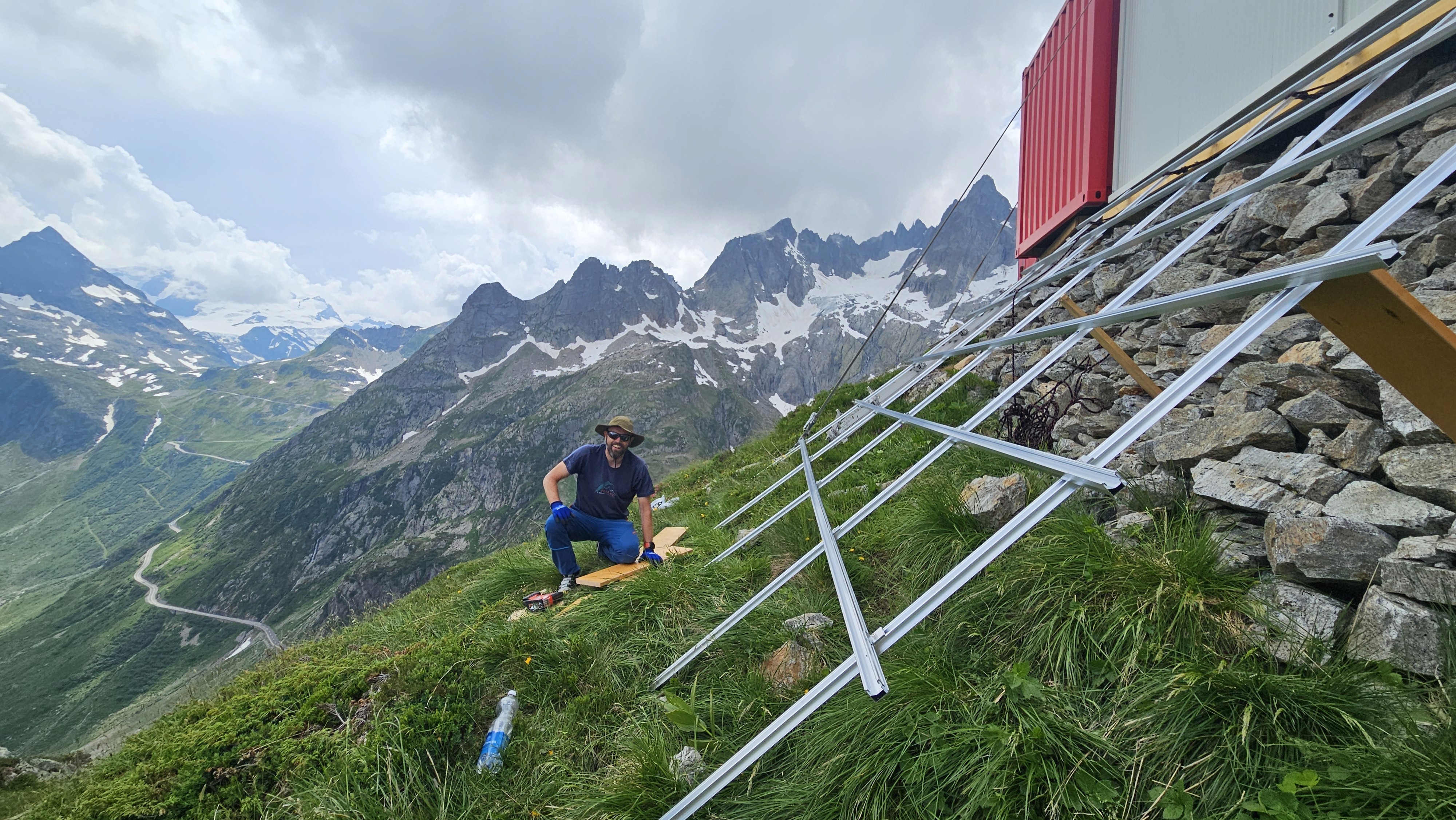
At 2,257 metres above sea level, the wind blows differently, and electricity does not simply come from the socket.
During the renovation phase of the Sustlihütte, operations must be maintained for the team of craftsmen and the hut crew.
The installed photovoltaic system on the slope is still dimensioned smaller during the construction phase. It is simply not sufficient to simultaneously power the energy-intensive tools of the construction site and the kitchen appliances.
To avoid bottlenecks, the power supply is split up. The construction site uses its own power sources, while the battery storage from modual is used specifically as a buffer for the hut kitchen. This ensures that refrigerators, lights and cooking facilities remain ready for use at all times.
Transport by helicopter: precision in alpine terrain
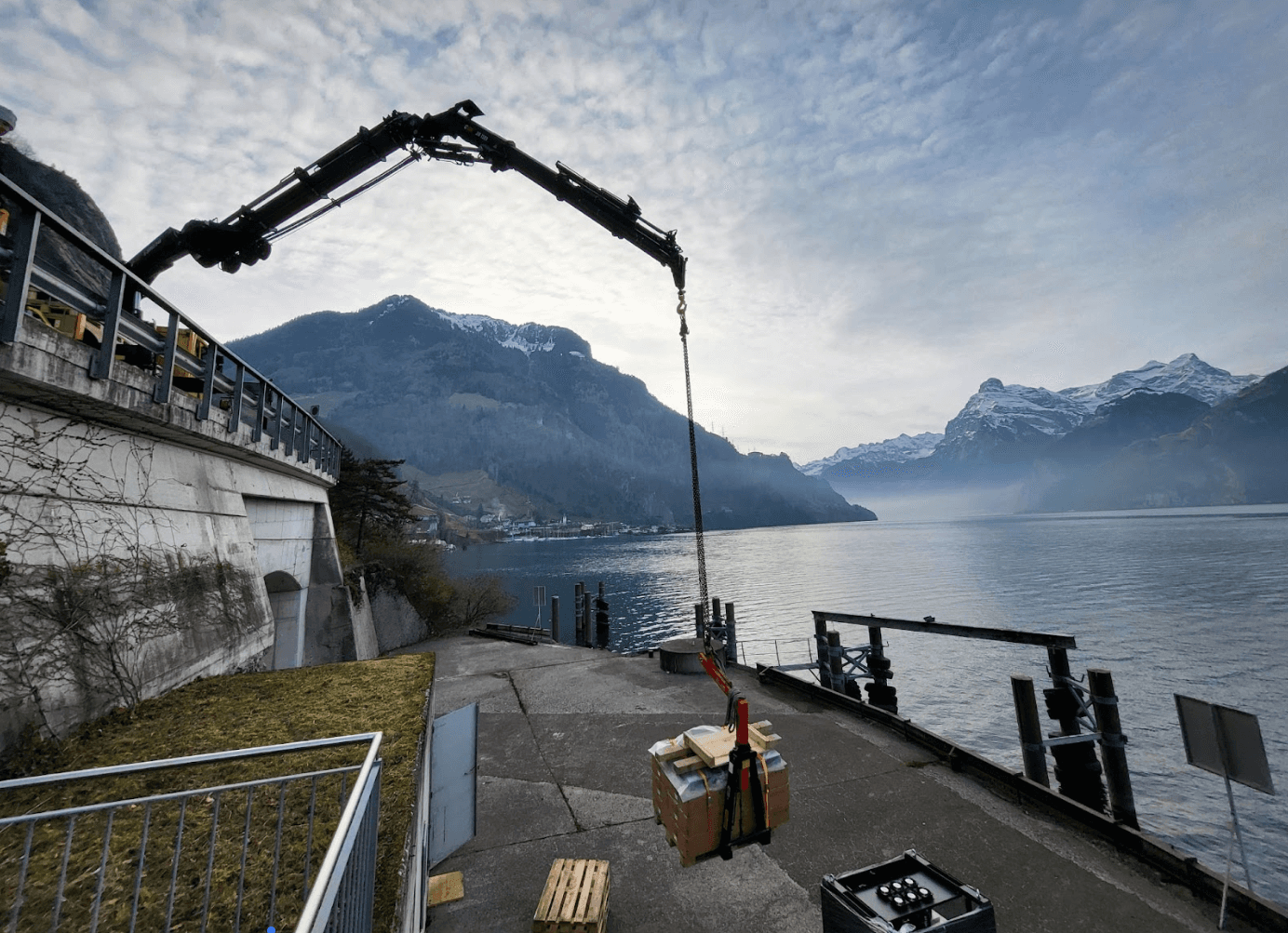
A storage system in the mountains must have an extremely robust design. Since there is no access road for trucks, it was transported directly by helicopter.
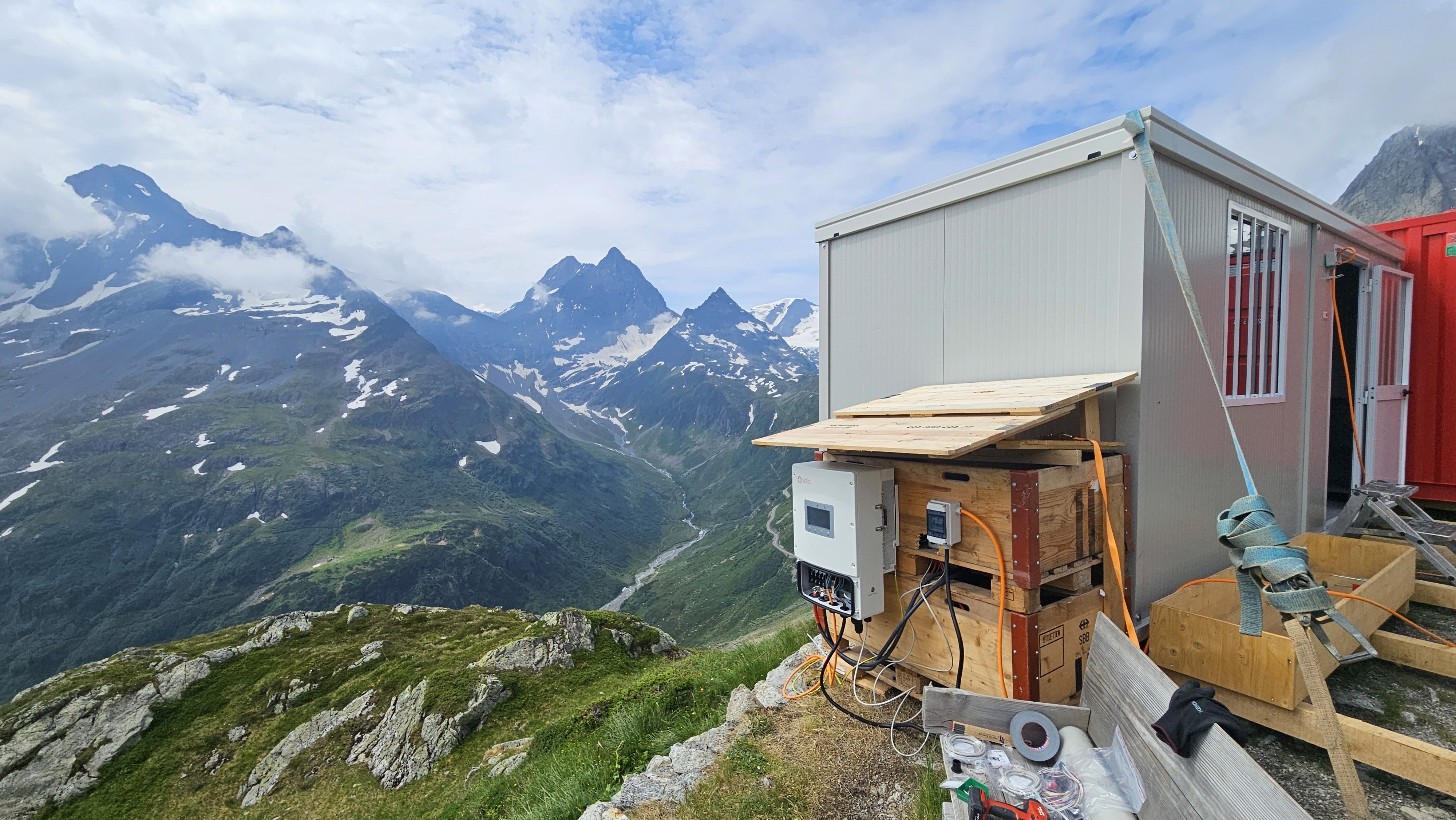
Wooden box transport: The battery modules and the control unit were flown in a sturdy wooden structure and set down directly on site at the installation containers.
Weather protection: Weather changes rapidly on the mountain. The inverters and connections are mounted securely on the outside of the container.
Easy setup: Solid plug connections and a clear system allow for rapid commissioning without long downtimes on site.
Second-life technology: no temporary waste
The basic principle of the battery technology used is based on circular economy and reuse. Used lithium-ion batteries from electric vehicles usually still have a remaining capacity of around 80 percent after their use in cars. Instead of recycling these cells prematurely, they are tested by modual and assembled into modular storage systems.
A key benefit of this project lies in the avoidance of waste:
Temporary use: During the renovation phase of the Sustlihütte, the storage system serves as a reliable power source for the kitchen.
Reuse: After completion of the construction work, the system is not disposed of or dismantled, but transported directly to its final destination.
Permanent installation: The system is then permanently installed in another hut and will perform its service there for years to come.
This avoids the typical waste associated with a temporary installation, which otherwise occurs with temporary construction site setups.
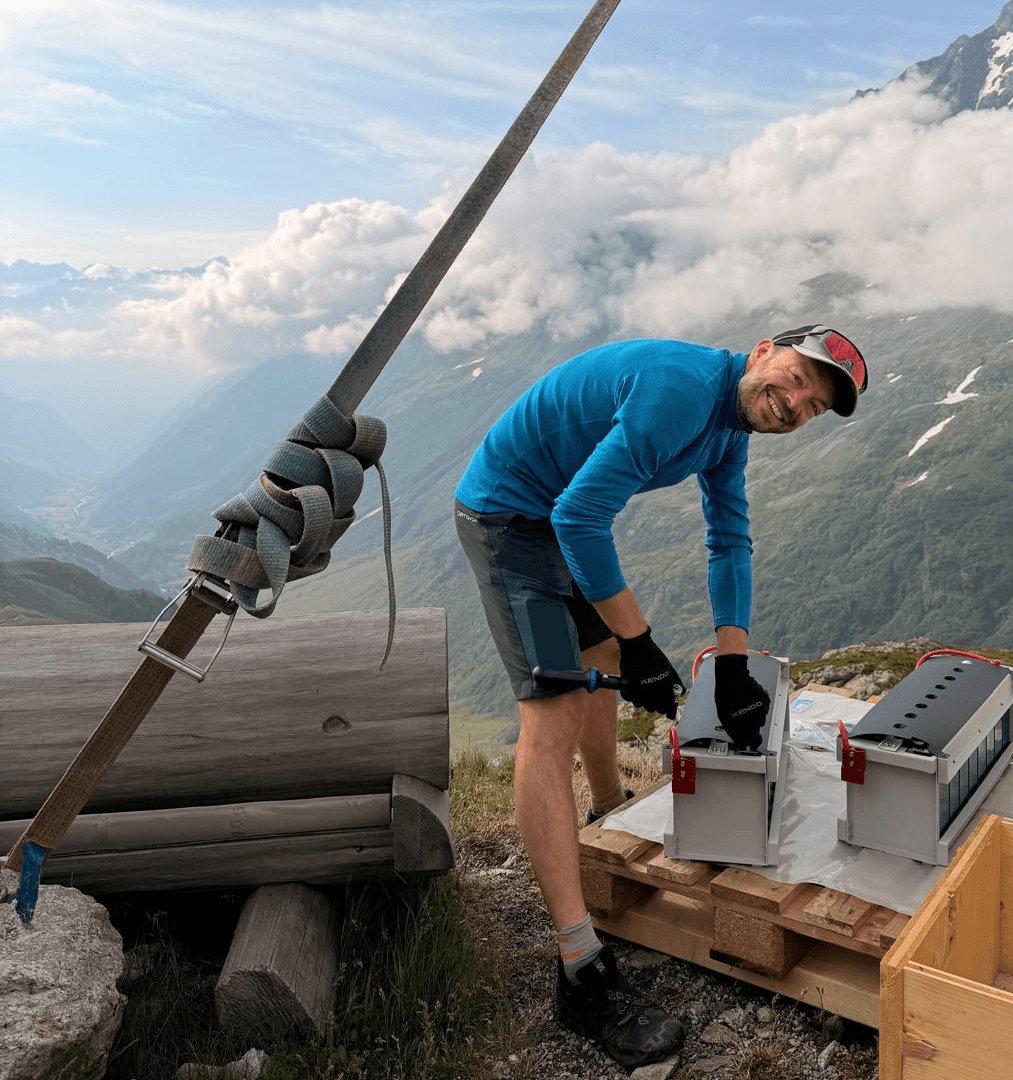
Practical insights from construction: reliability as the top priority
In the harsh everyday life above 2,000 metres, functionality counts above all. A failure of the power supply in the kitchen means cold meals and interrupted workflows for the team.
The modual battery storage reliably absorbs the fluctuations in solar radiation. If the sun shines intensely on the solar modules on the hut slope, the storage is quickly charged. If fog rolls in or the temperature drops in the evening, the energy collected in the storage ensures uninterrupted kitchen operation.
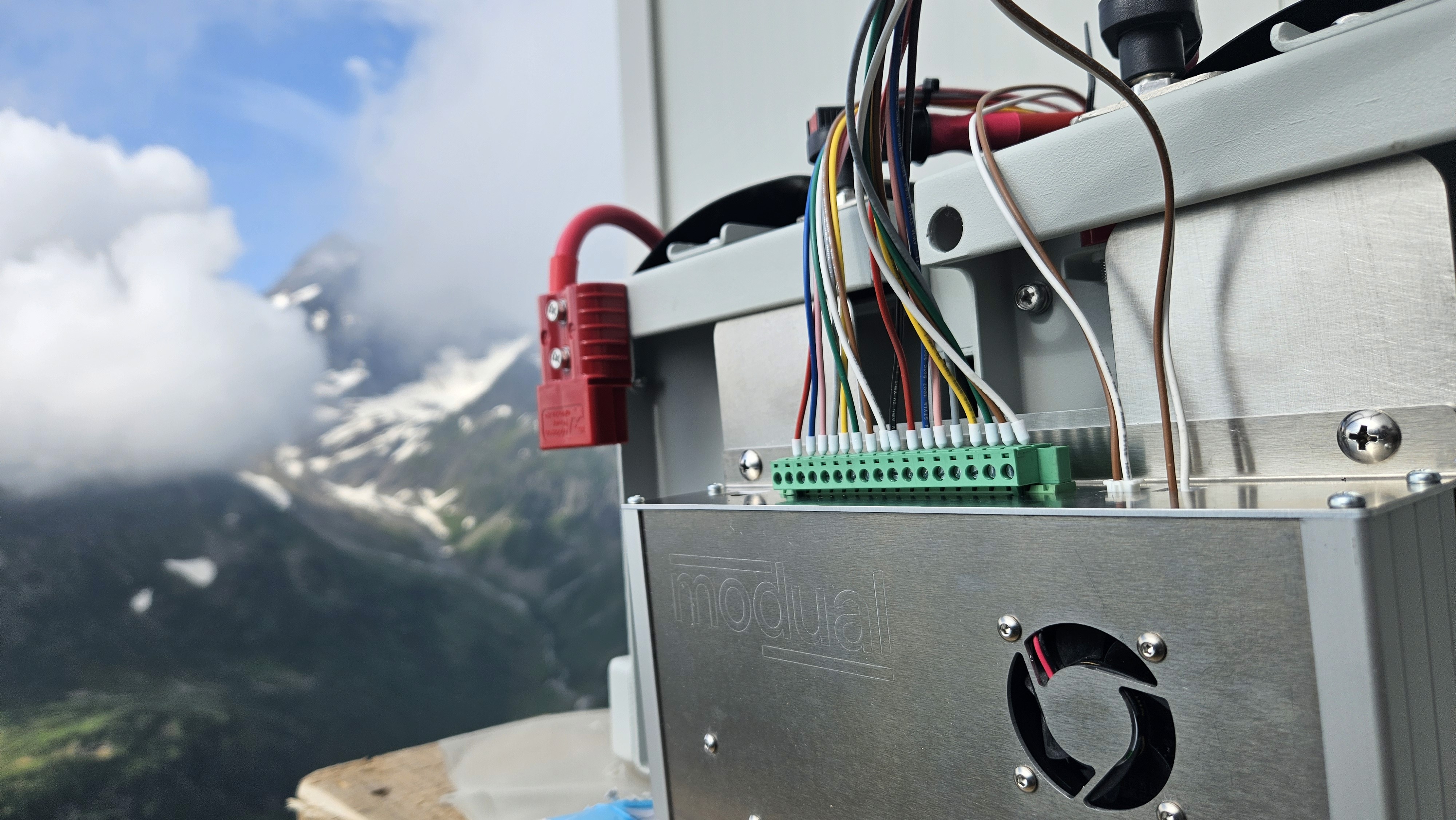
Thanks to the integrated battery management system, the state of each individual cell remains in view, which ensures the necessary operational safety even in fluctuating temperatures.
Clean energy for the alpine infrastructures of tomorrow
The deployment at the Sustlihütte shows that sophisticated energy concepts in the high mountains are feasible and can be implemented pragmatically. The combination of used battery technology, flexible use and reuse in a subsequent project combines Swiss craftsmanship tradition with modern resource efficiency.
Are you planning your own self-sufficient project or looking for a mobile energy solution for demanding locations? Write us your experiences or questions directly in the contact form.